
Premise developed a strong ability to collect valuable data via its consumer app,. They had been using a services model to deliver insights. As more customers signed, scale became a problem. Insight velocity was capped by the number of analysts to produce insights.
To address scaling, Premise decided to hire a Data & Insights Product Manager. The stakes were high, as failing to deliver on promises could result in losing key accounts. I was referred to Premise and was immediately captivated by the mission and the challenges it presented.
Upon joining, I realized that the recently developed customer “Portal” was underutilized. Few customers using it to download raw data. The majority were relying on Looker dashboards for insights. The services model was not sustainable for scaling.
Premise had developed another data and insights application, “Iris.” It was powered by bespoke data science produced datasets. This created a fragmented product landscape. It was further complicated by the accumulation of technical debt over the years. We needed a cohesive strategy to move forward.
Strategy and Goals
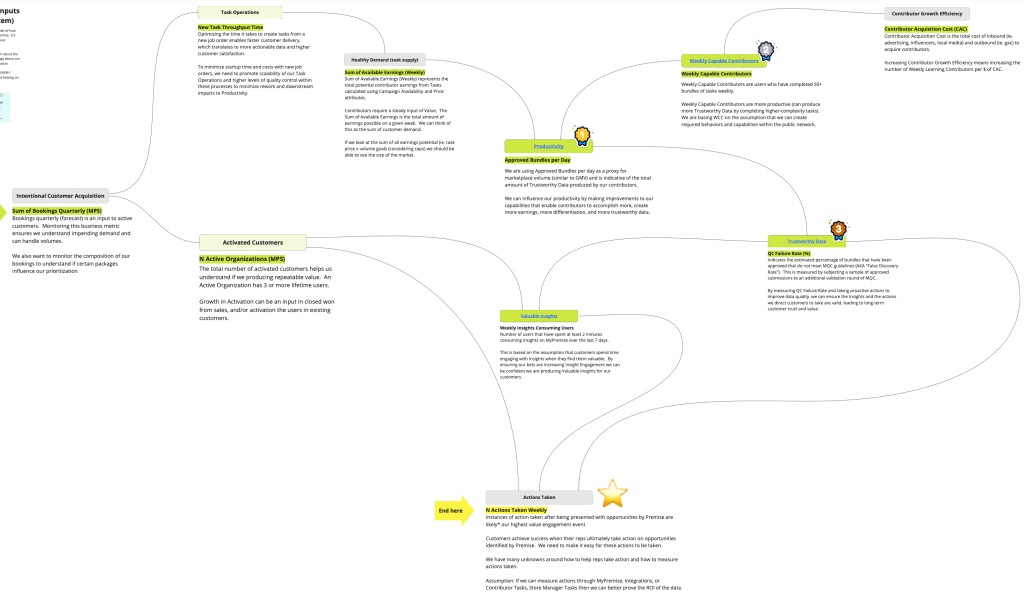
A key part of success was managing up. Until this point leadership was heavily involved in defining the roadmap. I believe it’s best to empower product teams with the right information to make decisions (ie. Empowered Product Teams). I thought this would be an excellent situation to establish a North Star metric. I spent some time building relationships and finding allies. Then I encouraged leaders to push for a north star metric. It took many believers but we aligned on weekly insights consuming users.
A North Star metric should be a leading indicator of business objectives. We found customers sharing and consuming insights to be a strong indicator of value. Insights are defined as data presented in a way that enables action, distinct from raw data. The more we deliver valuable insights, the more likely the customer was going to retain or expand their business with us. This strategic metric was decomposed by domain and team.
We gathered key insights from customer feedback and internal interviews to align product. This customer-centric approach helped us identify critical opportunities for improvement.
Discover Build and Iterate
We identified many opportunities along with technical limitations to addressing them. Engineering advocated for re-platforming rather than building on top of Portal. This was a tough call given the demand for new capabilities but essential. I evangelized this decision to our partners and customers. We rallied the team around our new direction and brainstormed solutions. This is the most fun part of this job, and it was a pleasure.
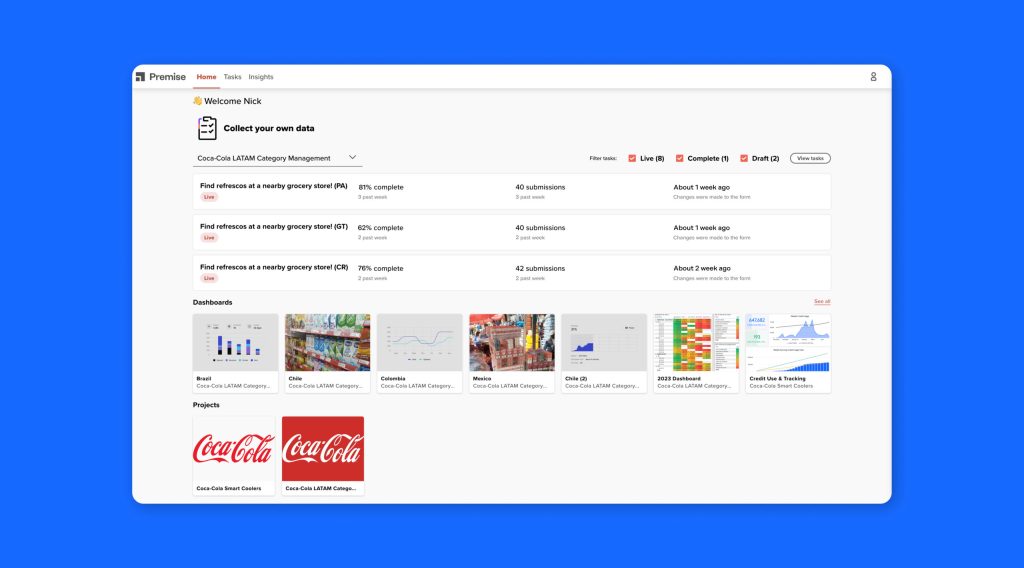
After the re-platform investment, we rolled out our new application MyPremise. We did this over a series of phased releases that each included discovery and iteration.
Replacing Portal
Step one was building a new scalable platform layer. This would enables advanced data analysis customers have been asking for.
All Premise customers were given access on to Portal with their subscription. It was Premise’s latest customer app. Replacing the functionality here was a key milestone to launching MyPremise. From our discovery we knew there were key table-stake type capabilities customers expected. Given technical constraints they had no been implemented in Portal.
We included some key highly sought capabilities that were not possible in Portal. We validated these hypotheses with customers and proxies. We then proceeded based on positive feedback.
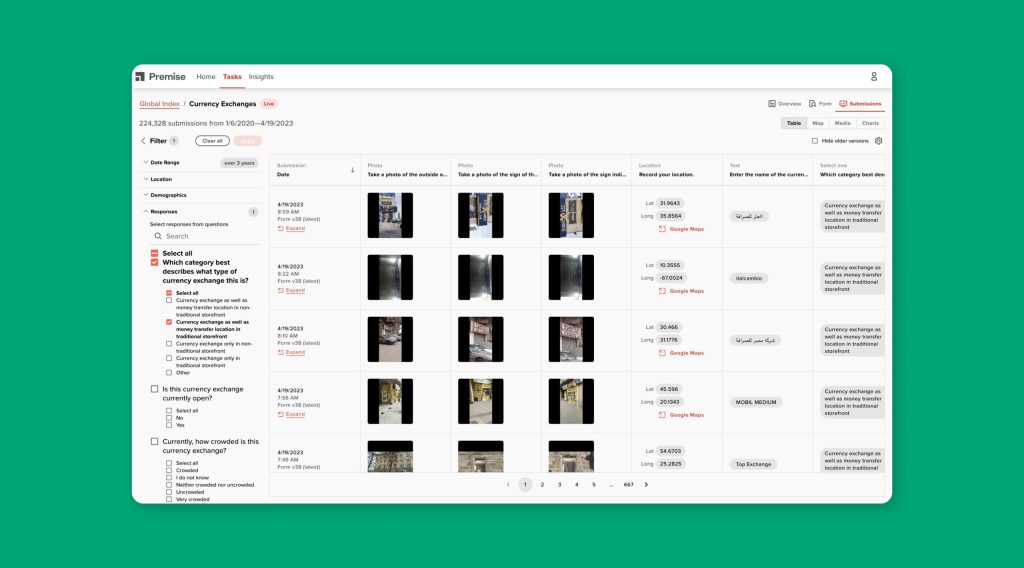
One ubiquitous opportunity was the desire to filter on answers to questions. Not a surprising but given technical limitations it continued to be deferred. Qualitative and quantitative demand galvanized the team to find a solution.
We coordinated previews for a representative sample of customers. This allowed our team to observe customers on a small scale while ironing out the details.
Enabling Insights
Once customers migrated to our new scalable application, we turned towards insights generation. Previously nsights were delivered via manually produced Looker dashboards. Or maps produced using other tools like ArcGIS. Customers could not self serve create insights on our platform. We had learned customers were using raw data to create their own insight reports.
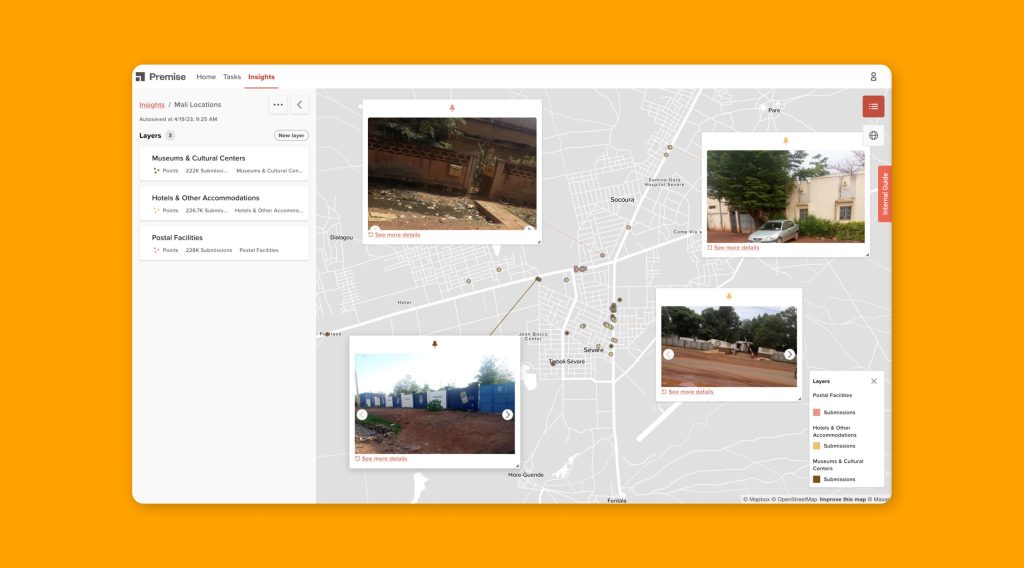
After evaluating and comparing the opportunities we decided to focus on building maps. Valuable maps are harder to produce without specialized skillset. Also some key high value accounts relied on map insights.
To validate the viability of this for our business we used prototypes and estimation. After mapping out our expected flow, we enumerated key assumptions. We shared prototypes of the new capabilities with internal team members. They would need to use the tools and encourage customers to use them. They believed that if we built it they could scale production of insights.
To validate the value, we produced target Insights manually using third party tools. Customers expressed pleasure with the maps and demand for more. This encouraged us to move forward with map insights.

Bringing it together with Reports
We knew internal teams and customers were producing slide and dashboard insights. They wanted to tell a specific story to inform action. Our vision was to automate insights generation. We had a strategic focus to move in this direction.
We used prototypes, estimation, and existing data to support pursuing this capability. We had a strong hunch it would improve our north star metric.

Outcome
Ultimately customers were very happy with the improvements over Portal and Iris. It led to significant improvements in stickiness, time spent, and insights consumed. This correlated with doubling total ARR from 2022-2023. Many accounts specifically called out the new capabilities in their renewal conversations. It also correlated with growing commercial revenue, a key strategic focus. Afterwards I was promoted to Senior PM.
This was my first time influencing leadership to move to a more empowered product team model. It’s the clearest case of how influencing without authority can be done systematically.
The experience taught me valuable lessons about ensuring alignment and managing change sensitively. Also the importance of not making assumptions about shared understanding within the team.
 Nick Scannapieco - Product Manager