
In early 2023 it was becoming clear at all levels that LLMs were revolutionary and Premise needed to find a way to incorporate them. There was pressure from the board, leaders, and customers. An entrepreneurial sales leader had an idea. It generated a lot of excitement. He was able to recruit a Staff Data Scientist to help, but Premise is a big org with many moving parts. Those two alone could not get the product to market. I saw an opportunity and proposed how I could help. Since then we’ve launched Premise VideoAI. Based on early customer outcomes we believe it could be a massive opportunity.
It was clear to me then as it still is now: Premise is uniquely positioned to win qualitative insights at quantitative scale. LLMs will continue disrupting market research. The scale limitation in qualitative research is no longer a limiting factor. AI agents will conduct qualitative research at scale. This will opening up a whole new world of possibilities.
So why is Premise uniquely positioned to win? We have a massive network of contributors who can be called upon in a moments notice.
Joining the team
I’m very excited about our new AI enabled future. The day ChatGPT launched it was clear we had entered a new world of possibilities. I started incorporating it into all my workflows. I evangelized it with my team members, family and friends. We all need to adopt it, lest we get left in the dust. So when I caught wind there was a new AI project at Premise, I really wanted to get involved.
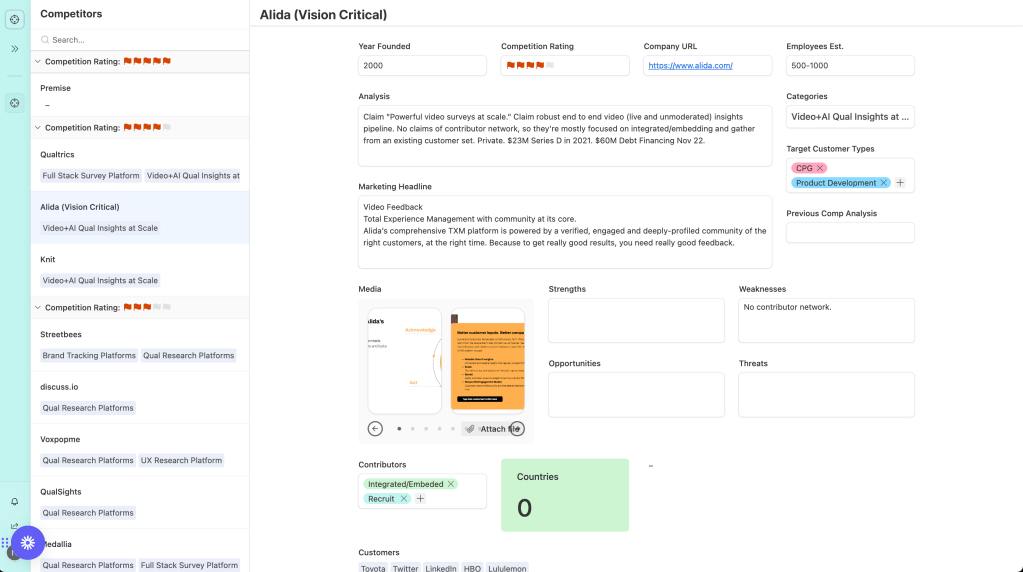
When I offered my help there was a compelling sales deck and initial scripts to produce a new AI enhanced aggregated dataset. There was a lot to do, but where to start? We could’ve launched off in a number of directions: customer interviews, research, design. Yet we needed to build trust with the leaders funding this initiative to support further investment, including my time. I believed in the vision but this was far from greenlit for further investment. Leadership wanted a better understanding of the market and competitors. I revved up my competitive analysis skills and put one together.
In my very early days as a PM I over indexed on competitors. It helped me establish skill in assessing and evaluating market threats and opportunities. My first professional project was creating a competitive database for executives. Today I love using Airtable for quick data apps. I used it to put together a competitive analysis for VideoAI. Afterwards our leaders gave me the green light to dive deeper and focus solely on VideoAI.
Aligning the team
So back to that sales deck. It generated a lot of excitement, but also a lot of dread. People were wary of chasing shiny objects, and selling what we’re not yet ready to deliver. Why shift our limited focus away from things we know are working and still have so much room to improve? All valid questions and concerns. Our first step was putting together an elite cross functional team to create shared understanding and context.
My tool of choice to achieve this was a Pre-Mortem in Miro using Shreyas Doshi’s template. Pre Mortems give people permission to be pessimistic. This is an important frame and skill when trying to see beyond the promise and see where things could go wrong. This straight forward exercise has the potential for exponential returns. You can identify where things can go wrong, and focusing the team on how to address those things early.
A SME who participated said it was the most valuable meeting she had been been a part of at Premise. It’s this kind of innovation that can shake people out of the mundane.
Afterward the team felt heard and empowered to continue voicing their perspectives. We raised the concerns with leaders to justify requests for more resources. And we could set realistic time frames and expectations across the company. Ultimately leaders wanted to press on. the first customer with early access to the new data was very interested. This gave us confidence to continue equipped with shared context. But how?
PRFAQs FTW
Premise is a sizable organization with many moving parts. Yet it’s also still very much a startup: shifting priorities, ambiguity, team churn, silos, etc. There was not yet a standard practice for how to align a team and go to market with a new product.
I really enjoy the approach popularized by Amazon and documented in Working Backwards. Although we weren’t exactly starting fresh, I felt like it’d be a great tool to rally folks around. I knew this was an excellent time to flex that skill.
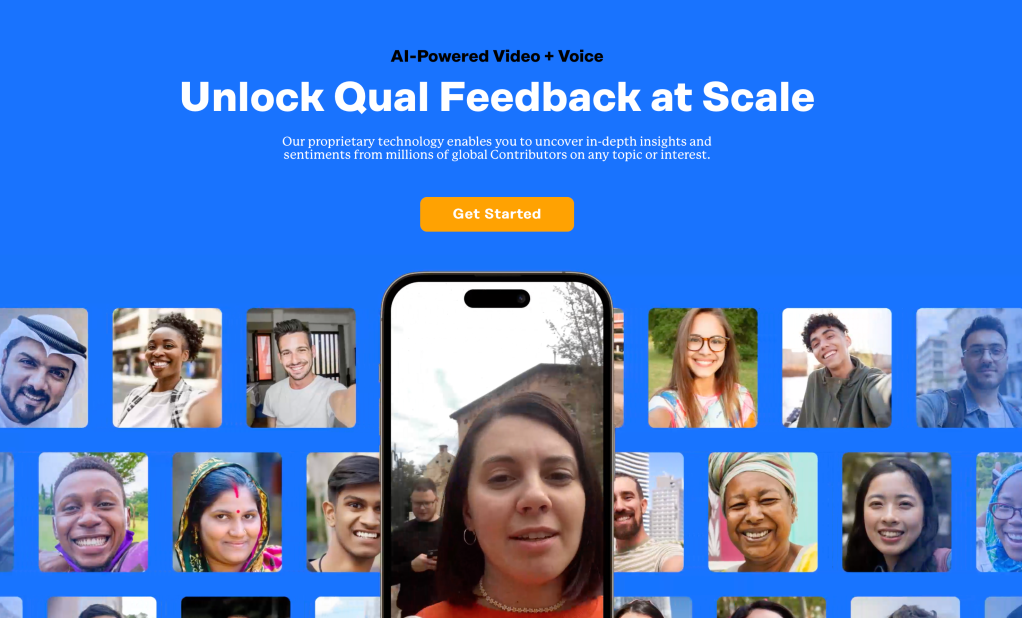
Over the next few weeks we used the PRFAQ format align on a vision and strategy across departments. The PRFAQ obtained significant collaborative input. It became the source of truth on where we were might be going, and how to talk about this budding product. We got to work adopting it into the landing page and other content.
Soft launch and the future
At this point we were making some progress, but as a PM I would be a remiss not to point out some major steps still ahead. Although we had some early validation for value, viability, feasibility, and usability there was still much to learn.
Our next steps are to continue to evaluate the key risks of this product like pricing it effectively.
To address the feasibility and viability concerns we put together a plan for an early adopter program. We established target customers and constraints in the sales process. This way we could further validate some key hypothesizes.
For the value hypothesis we’re planning to follow the approach that I used when helping Istruzi validate the key value hypothesis. We’re also establishing initial business goals with leadership to inform KPIs and team allocation.
Some key learnings
It doesn’t have to be your idea to make a big impact.
As a PM in tech these days the idea for a new product will rarely be yours, that doesn’t mean you can’t make a huge impact driving it. Don’t let your ego get in the way, join a team and move the ball forward.
Don’t get too attached to an idea, be a voice of reason to balance out the hype
Yes AI is exciting, yes Premise VideoAI could be a big winner, but it’s more important than ever to be questioning cool ideas. The barriers to launching products will continue to come down. Differentiation will be achieved by being very deliberate and methodical with your team’s time. Rather than being drawn by cool tech possibilities, everything should be rooted in validated customer needs.
It takes a village, so bring everyone along, make sure everyone knows they are essential to success
Unless you’re a one, or few, person shop.. you’re going to need to learn how to influence others without authority. This can be boiled down to understanding peoples needs, and finding a way to get them what they want/need so that they can help you. When doing so don’t forget a bedside manner, be real, and create mutual empathy and understanding.
Have a big tool chest and be creative in deploying it
There’s no shortage of valuable frameworks, workshops, etc. out there for product. Don’t get over attached or let good be the enemy of great with picking one and applying it. Experiment!
 Nick Scannapieco - Product Manager
Leave a comment